Photos of Aboriginal Initiation Ceremonies from Northern Australia



Aboriginal Initiation Ceremonies from Northern Australia
In most traditional Aboriginal communities of the Top End of Australia boys are initiated into manhood in a cycle of ceremonies that usually take several days. Although serious, there is not as much secret-sacred business involved as in the elaborate rituals of Central Australia and most ceremonies take place in the main camp in view of everybody. Generally, boys are initiated at a much younger age than their counterparts in the Centre; boys may be as young as 7 years old. There are different ceremonies depending on the region and ethnic and family background of the boys involved.
you may then send it as a postcard if you wish.
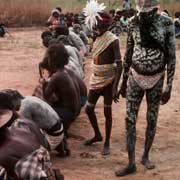
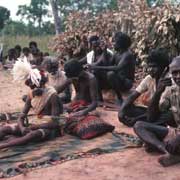
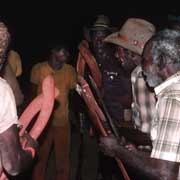
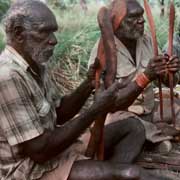
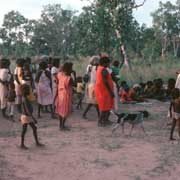
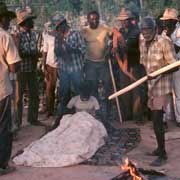
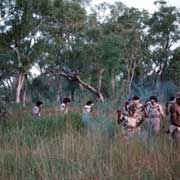
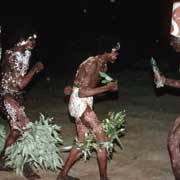
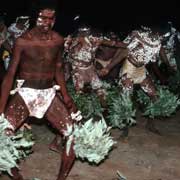
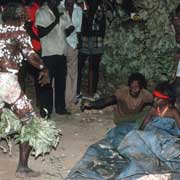
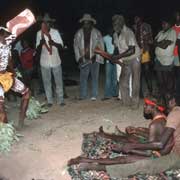
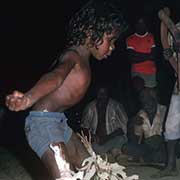
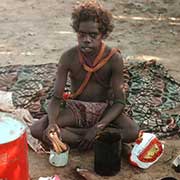
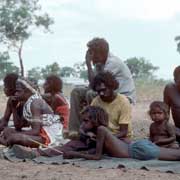
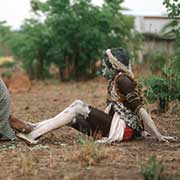
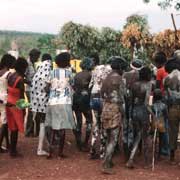
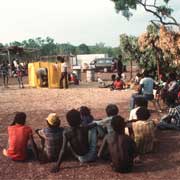
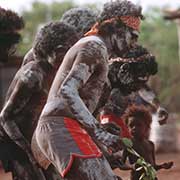
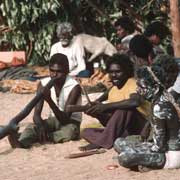

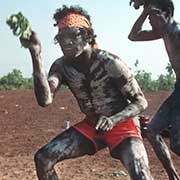
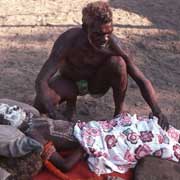
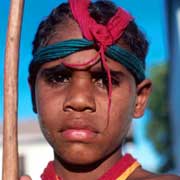

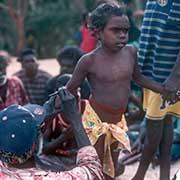
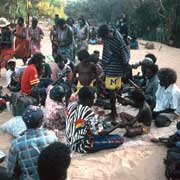
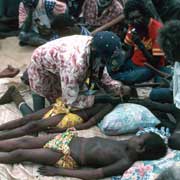
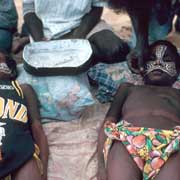
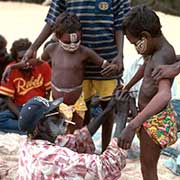
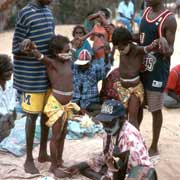
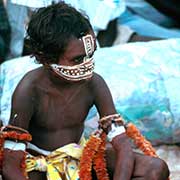
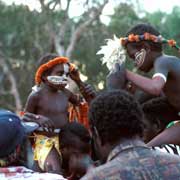
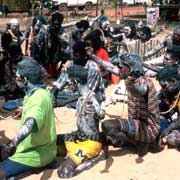
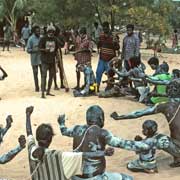
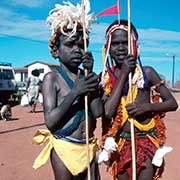
One of the most common initiation ceremonies, found in the Top End, from Barunga in the west to Borroloola in the east is the "Mandiwa" ceremony or, as it is called in north Arnhem Land, "Mandiyala" or "Mandiwala" (Marndiwala); boys are given small boomerangs and spears and try to hit with these men that will have to dance for them during the all-night dances later. Men are painted with white clay and cotton wool is stuck on their bodies in traditional patterns, representing the "dreamings" they belong to. While older men sing and clap boomerangs together, the men perform a short rapid shuffle dance, said to represent the dance of the frilled lizard in front of the initiates. Men perform the dance with their classificatory brothers. The following early morning, after women and children have gone home, the initiates are circumcised.
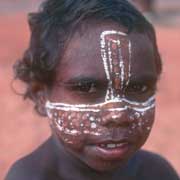
Another type of initiation ceremony that is more typical of Arnhem Land is called "Djapi" in which initiates' faces and torso are painted with clan designs. Men and women perform various totemic dances, accompanied by chanting, didjeridu and clapsticks and the boys are guided through various performances. On the last day of the ceremony the boys are circumcised, right in the general camp but shielded from view with a cloth partition.
This marks their first initiation stage; later they may attend sacred ceremonial cycles, like "Kunapipi" or "Yabuduruwa", closed to all but initiated men.